
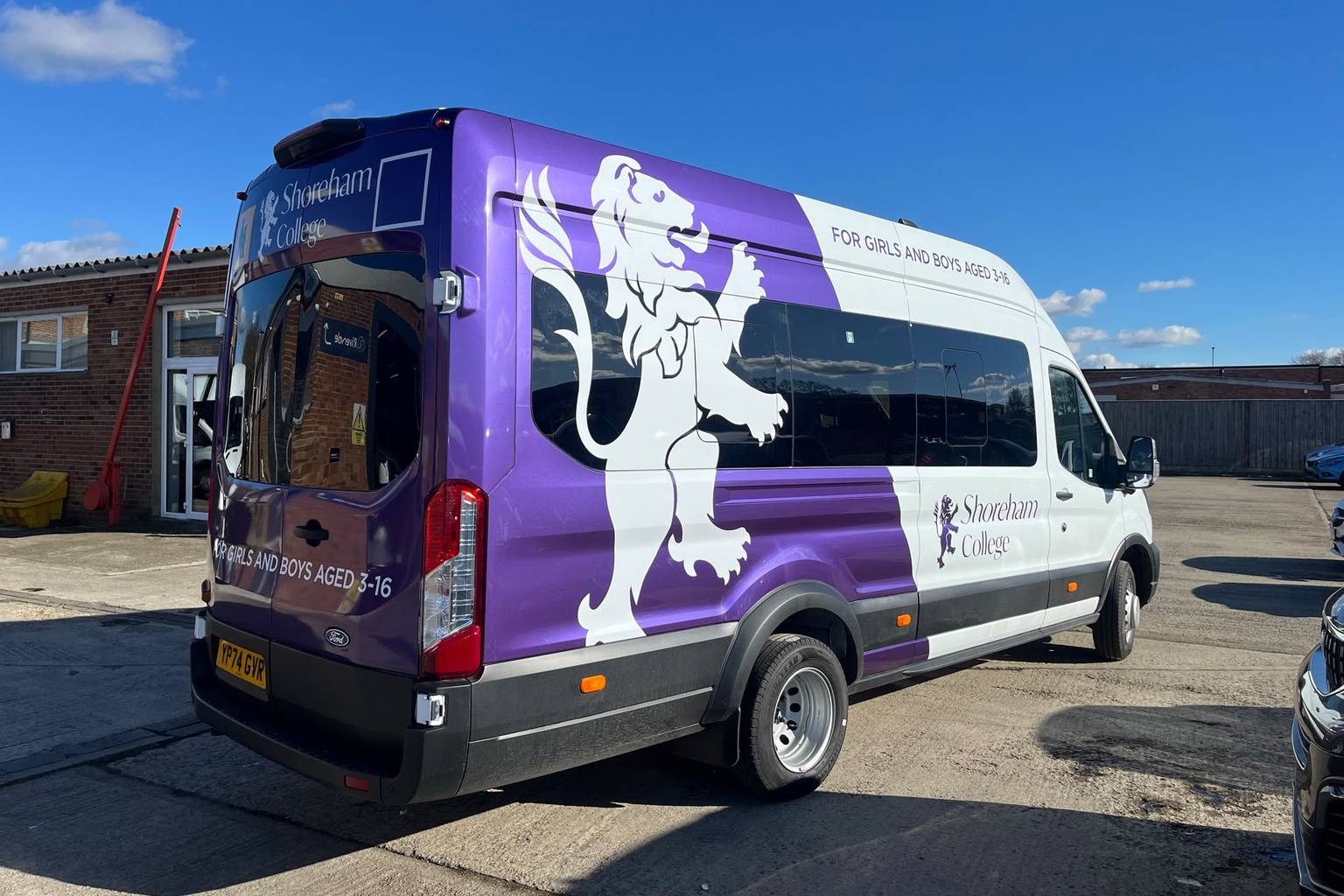
Part Wraps in Wolverton - Choosing the Right Material for Your Van
If you're looking at part wraps for your van in Wolverton, knowing your material options upfront means you get a finish that lasts - and you don't pay for more than you need.
What a Part Wrap Actually Involves
A part wrap means applying printed or coloured vinyl to specific panels of your vehicle rather than the whole thing. That could be a bonnet, side panels, rear doors or a roof section - wherever your branding does the most work. We cut the vinyl to fit the panel precisely, prep the surface, apply the film and finish the edges cleanly so there's nothing to lift or catch.
We design and print everything in-house, and we travel to you - the job is done at your premises, yard or wherever the vehicle is based in and around Wolverton.
The Two Main Types of Vinyl Film
Not all wrap vinyl is the same, and the difference matters when it's going on a working van rather than a show car. The two main categories are cast film and calendered film. Each has genuine advantages and real drawbacks.
Cast Film
Cast film is made by pouring liquid vinyl onto a casting sheet and allowing it to cure. The result is a thin, flexible film - typically around 75-80 microns thick - that conforms to compound curves, recesses and character lines without creasing or lifting. It's the material used for professional vehicle wraps.
The advantages are significant for van work:
- Conforms properly to door handles, panel recesses and curves without lifting edges
- Thinner and less likely to leave a visible edge line around the panel
- More stable over time - less prone to shrinkage, which is what causes lifting at edges
- Holds colour better over its lifespan
The main drawback is cost. Cast film is more expensive than the alternative, and that cost is passed on in the final price. For graphics on flat or near-flat panels on a plain-sided van, the extra outlay is still worthwhile - you're buying longevity and edge adhesion. For complex curved panels or deep recesses, it's genuinely necessary.
Calendered Film
Calendered film is made by rolling vinyl through a series of heated rollers. It's thicker - often 100 microns or more - and less flexible than cast film. It's cheaper to produce, which makes it cheaper to buy.
Calendered film has its place. On flat panels - think a large flat-sided panel van side or a rear door with minimal contours - it performs well and the lower cost can make it a sensible choice for short-term signage or fleet vehicles that change livery frequently.
The honest drawbacks:
- It has memory - over time it wants to return to its original flat shape, which causes lifting at curved edges and panel recesses
- Thicker edges are more visible, particularly on darker base colours
- Not suitable for deep recesses, compound curves or around door handles
- Shorter usable lifespan than cast film in the same outdoor conditions
For a flat-panelled Sprinter or Transit with large, relatively flat graphic areas, calendered film can be a sensible budget option. For a Transit Connect, Berlingo or any vehicle with pronounced character lines and body sculpting, cast film is the right call.
Finish Options: Gloss, Matt and Satin
Beyond the film type, you have a choice of finish - and it affects both the look and the practicality.
Gloss
Gloss is the standard finish for most trade van wraps. Printed graphics look vivid and sharp, colours are punchy, and the finish is easy to clean with a wipe-down. The drawback is that gloss shows fingerprints, light scratches and swirl marks more readily. On a working van that gets handled constantly, gloss can start to look marked over time.
Matt
Matt vinyl gives a flat, non-reflective finish. It hides minor surface marks and scuffs well, and on some livery designs - particularly those with bold block colours or simple text - it can look more distinctive than gloss. The trade-off is that matt finishes are harder to clean thoroughly. Road grime can dull the surface and some cleaning products will leave streaks or marks. Matt is a valid choice but go into it with open eyes.
Satin
Satin sits between the two - a low-sheen finish that's easier to maintain than a full matt but less reflective than gloss. It's become popular on fleet vehicles because it offers a premium look without the upkeep issues of a true matt finish. It costs slightly more than standard gloss in most cases.
Printed Graphics vs Solid Colour Film
A part wrap can use printed vinyl - where your design, logo, photos or text are digitally printed onto the film before application - or solid colour film, which is a uniform colour with no print.
Printed vinyl is what most tradespeople need: your logo, contact number, services listed, maybe a background colour or gradient. The print is laminated with a clear overlaminate to protect it from UV, abrasion and washing. Without laminate, printed graphics fade much faster and are vulnerable to scratches.
Solid colour film is used when you want to change the colour of a panel - recolour a bonnet, add a contrast roof, change door colours to match a corporate palette. No printing is involved; the film itself is the colour. It's cleaner looking for certain styles of livery and slightly more forgiving in terms of panel prep because there's no print layer to show surface irregularities.
Which Panels Are Worth Wrapping?
Deciding which panels to include in a part wrap depends on where your van gets seen and what you want people to notice.
- Side panels - the highest-visibility area when the van is parked or moving. If you do one thing, do the sides. Full side graphics on a panel van have the biggest impact for the spend.
- Rear doors - seen by drivers behind you in traffic and when you're parked on a job. Good for a contact number and a simple logo or brand name.
- Bonnet - seen when you pull up outside a property. Less effective for text-heavy graphics, but useful for a bold logo or brand colour on a fleet that parks nose-first.
- Roof section - increasingly used by businesses that work near multi-storey car parks, office buildings or anywhere with elevated viewing angles. Not always worth the extra cost for every trade.
Partial vs Full: Knowing When to Stop
A part wrap done well looks deliberate and professional. The key is making sure the wrapped panels sit naturally against the unwrapped ones. A good approach is to let the vinyl run to natural panel breaks - door shuts, body creases, trim lines - rather than stopping mid-panel. Mid-panel cut lines can look unfinished and are harder to maintain cleanly over time.
If you're working with a white or light-coloured base van, contrast-colour partial wraps work particularly well because the base colour becomes part of the design. On a darker base, the contrast between wrapped and unwrapped panels requires more thought at the design stage - which is something we work through with you before anything gets printed.
What It Costs and What Affects the Price
Part wrap pricing depends on the number of panels, the size of the vehicle, the complexity of the design and the film specified. As a general guide, a single rear door panel with printed graphics runs from around £150-£300. Both side panels on a medium panel van can range from £400 to £800 or more depending on design complexity and vehicle size. Bonnet or roof sections vary considerably by vehicle.
The film material also affects the price - cast film costs more than calendered, and satin or specialist finishes cost more than standard gloss. We'll give you an honest breakdown of what you're paying for so you can make an informed decision rather than just comparing headline prices.
Get a Straight Quote for Your Wolverton Van
Send us a photo of your van and a brief on what you want - which panels, what information needs to go on, any existing branding to match. We'll come back with a clear price. We come to you in Wolverton and the surrounding area, so there's no need to drop the van off. Call us or use the contact form to get the conversation started.
Why use us in Wolverton
- Your design shown on your vehicle before printing.
- Graphics designed and printed by us.
- We fit at your premises in Wolverton.
- We are insured.
Also available
Other services in Wolverton
Van Wrapping
We design, print and fit full or partial van wraps in Northampton, working at your premises so your vehicle never needs to leave your site.
See detailsCommercial Vehicle Wrapping
We wrap commercial vehicles of all types across Northampton, from small vans to large panel vans and specialist bodies.
See detailsFleet Wrapping and Branding
We design, print and fit branded wraps across entire vehicle fleets in Northampton, ensuring every vehicle in your fleet looks consistent.
See detailsPart Wraps in Wolverton?
Phone us or fill in the form. A few details about the vehicles are enough for us to start on a written quote.